Tuesday, December 2, 2014

The Grand Unified Theory of Transplants -- or "To Transplant or Not to Transplant"

Hello folks.

I do a fair amount of outreach in the online and real world, and I've noticed that time and time again the same questions are being asked about transplants that were asked five years ago.  Should they be done at all?  Should they be done up front or later?  Should there be one or two?  It also occurs to me that doctors -- even the most brilliant ones -- may or may not be excellent at making decisions the way they are made in business, or even explaining concepts.  So I'm going to approach this using the reasoning that I've learned and applied outside the medical field and outside research to try to provide a different perspective.  I'm not a doctor -- so please take all this with the knowledge that I'm just trying to make sense of something from a layman's point of view.  I'd like to acknowledge the help of my good friend a fellow MM warrior Suzierose, aka Myeloma Cinderella, who is no fan of transplants (for well-founded reasons) but who has vetted the substance of what I write below.

We're talking about auto transplants here, by the way, not allo transplants.


What a Transplant Is, and What a Transplant Is Not.

A transplant, first of all, is not really a transplant.

Think of a transplant as high dose Melphalan[1] instead.  Melphalan is a type of chemotherapy.  That’s it to a transplant, nothing more, nothing less: a transplant really is just a lot of chemo.  After this, you get your own blood back to help you recover.  That’s it.  There’s no “transplantation” and getting the blood back serves no purpose in killing the myeloma.  The purpose of an auto transplant is to kill Myeloma with Melphalan.  This is in contrast to an allo transplant, the purpose of which is to kill Myeloma by introducing a donor’s immune system.  That is an entirely different ball of wax.

An auto transplant is not a transplant of anything.  I suppose you could call it a replant.  But it’s best thought of as high dose Melphalan.


What a Tandem Transplant is.

It follow from the above that a tandem transplant is nothing magical – it’s just double the amount of Melphalan.  If you’re doing it spaced a year apart, it’s not a tandem transplant -- it’s two single transplants.  The purpose – and value – of a tandem is simply to give you twice as much of the chemo at a time when the disease hasn’t yet become resistant to it.


Do transplants work?

Often, but not always.  It depends on what type of disease characteristics you have: very simply, if you have disease that is susceptible to Melphalan, a transplant will very likely be effective.  If you have disease that is not susceptible to Melphalan, a transplant will probably not be very effective.

Melphalan works by changing the DNA of cells in the bone marrow and getting in the way of certain processes that cells need to survive.  This process is called alkylation.  The Melphalan adds something to the DNA of cells that kills them.[2]

This kills a lot of cells.  It may not kill all of them; it may not kill enough of them; and it might also piss off the ones that survive.  It depends on whether or not the patient has myeloma that is susceptible to this precise type of treatment.  Most patients (80-85%) have cells that will be sufficiently killed by Melphalan to have some response.   Of that group, maybe half of them require a LOT of Melphalan to kill all the cells.

However…if the patient has cells that do not respond to Melphalan, not all the cells will be killed and the process of changing the DNA could result in an outcome where the remaining cells are resistant to this or other kinds of treatment, or whereby they mutate more rapidly and/or chaotically.

From this, a couple of things can be explained.  First, when people talk about “high risk disease” they have traditionally been talking about disease that has characteristics in common with other patients whose MM cells haven’t been killed sufficiently by Melphalan (or by other medicines).  Second, this explains the role of tandem transplants – some people need more Melphalan than others to kill all the cells.  Which explains when Melphalan was used by itself got 30% remission rates, but tandems do much better than that.


Do other types of therapy do the same thing?

Other types of therapy can be very effective, but don’t necessarily do the same thing.

Here are a few alternatives based on therapy I’ve received.

Traditional chemo used against newly diagnosed Myeloma comes in several flavors:

  • Cisplatin (the “P” of “PACE” therapy, which stands for platinum) works in a similar way.  It also monkeys with the guanine DNA.  It interferes with cell division, which is slightly different than the interference from Melphalan.  When the cell finds out that it can’t divide, it tries to repair itself.  When repair proves futile, the cell politely dies.  But cells have a way of learning to bypass platinum over time.
  • Adriamycin, the trade name of Doxyrubicin, is the “A” in “PACE” therapy (and Doxil is a modified version).  These drugs also interfere with DNA through a process celled intercalation (which disrupts DNA and the process through which cells replicate).
  • Cytoxan (the trade name of Cyclophosphamide, the “C” of “PACE” and the Cy of the CyBorD treatment) works in a very similar way to Melphalan.
  • Etoposide is the “E” of “PACE” and works differently.  It screws up a different part of the cell replication process by messing around with an enzyme that is needed by DNA strands during cell duplication, and causes those strands to break.  Cancer cells divide more rapidly than healthy cells and are more reliant upon this enzyme than healthy cells, so they are disproportionately effected.

Then there are two classes of drugs that have come to be called “novel agents.”

  • IMIDs (the class of drugs that includes Thalidomide, Revlimid and Pomalidomide) work by inhibiting cells in the bone marrow that support the Myeloma cells, and by inhibiting the growth of blood vessels that Myeloma relies upon.

  • Proteasome inhibitors (which include Velcade and Kyprolis) interfere with the process through which cells remove abnormal or misfolded proteins (and thus help the cell to survive).  When this process is interfered with, the cell eventually realizes it has too many abnormalities and politely dies.

Oh, and we can’t forget steroids.  Steroids suppress the immune system and kill plasma cells.  There’s prednisone, which is not as powerful or as effective as Dexamethasone.  If you’re killing plasma cells, you’re killing MM cells (they sit in the plasma).

It goes without saying that none of this is healthy.  The purpose, obviously, is to kill cells.  Killing cells through disrupting DNA is nastier and more chaotic than killing cells through other means.  Consequently, there are more side effects – both near-term and long-term – from chemotherapy that messes with DNA.  Patients must judge for themselves whether or not the additional side effects are worth the additional killing power.


Do transplants work as well as other types of therapy?   Do other types of therapy work just as well as transplants?

The answer is we don’t know yet.  We do know they work differently. 
  

Think of it this way.  The cells in group A, above, are only sensitive to alkylators like Melphalan.  Dr. Roger Tiedemann at Princess Margaret Hospital in Toronto has shown that in vitro (that is, in a lab outside the human body) the precursor cells of Myeloma do not exhibit the cell structure required to be susceptible to novel therapies.  His research shows that alkyalytors are essential to kill these precursor cells.  In other words, these cells exist in group A and they can’t be touched by novel drugs like IMIDs and proteasome inhibitors.  Those other drugs are the equivalent of moving a lawn full of weeds -- you are getting rid of the parts of the dandelion that you see, but the roots are still there and no amount of lawn-mowing will stop the weeds from growing back.  Not everybody agrees with this research..but it’s an idea to consider.

In group C are cells that are sensitive to Velcade or Revlimid but are not sensitive to Melphalan.  By definition, “high risk” MM either exists in quadrant C here (since Melphalan doesn’t work for very long, if at all, on some disease biology) or it exists outside these circles completely and requires that new solutions be found.  There is concern that for patients with disease that is not killed by Melphalan, the results of screwing with that DNA can cause advanced mutations in the MM cell that can make it more aggressive.  This explains why Total Therapy with Melphalan doesn’t work long-term for high risk patients, and explains why UAMS has moved away from transplants for those patients, as has Dr. Lonial at Emory.

Then there are those in group B – people with disease that could be killed by multiple means.   Here, do you just use Melphalan?  Or do you just use novel agents?  Or do you use both?  This requires a perspective on the concept of synergy between medicines, which I attempt to explain below.


The concept of synergy

There’s one more piece of the puzzle before we can start putting this all together.   It’s a pretty simple notion: the idea that multiple medicines work better together than individually.  Myeloma is smart.  Permit me a crude analogy:

If the Myeloma cells are in a room with one door, think of the medicine as a helpful monster preventing the MM from leaving the room, and eating the MM cells in the room who are panicking, looking for a way out.  The cells will start looking around for other ways out of the room, and will essentially cut a new door in the side of the room and leave through that new door.  The idea behind using multiple agents is that every potential door the MM might cut in the room has another type of medicine standing behind it and ultimately one or more of those monsters eats the cell before it can get out of the room somehow.

The concept of so-called “triplets” (e.g., VRD) and “doublets” (e.g., Rev + Dex) working better than single agents is established and pretty much universally accepted at this point.  This also explains why transplants done before the era of novel agents didn’t perform as well as transplants in the era of novel agents.  Synergy from using the drugs in combination created more durable response: deeper remissions and, in some cases, even cure.

It stands to reason that clobbering MM with VDT-PACE plus Melphalan plus VRD in maintenance is an aggressive version of this same philosophy – the question is whether or not there are a lot of patients in group B, above, who don’t need all of that – whether because their disease biology is particularly susceptible to novel agents alone, or whether because the newest novel agents (Kyprolis and Pomalidomide) are so powerful they can do a great job all on their own.   They need some synergy, but not as much as VDT-PACE offers.


When should one transplant?

Given what is laid out above, the decision on when to transplant is actually a much simpler one.

First, if you have disease that is unlikely to respond (or worse) to Melphalan, do not transplant.  How do you find this out?  You’ll need advanced bone marrow studies – such as UAMS’ gene array – to tell you what chromosomal abnormalities you have and you’ll need to learn whether or not those chromosomal abnormalities are consistent with those of patients who have not responded well to transplants.  Because per the first part of this little essay, it’s not that they aren’t responding to the concept of a transplant – it’s that Melphalan doesn’t work on that type of myeloma.

If you do have disease that is responsive to Melphalan, then the question becomes one of how extensive you (and your doctor) believe the synergies between medicines are:

- If you believe that there are real synergies between medicines, then transplant early, because you have naïve disease that will be confronted by as many different types of medicines as possible.  You’ll kill off most of the MM that way.

- If you believe that synergies don’t really make a difference, then transplant late.   You’ll kill off some of the MM with the first type of medicine, and when it returns, you’ll kill off some of it with the second kind of medicine (Melphalan).  Personally, I think this is a half-measure – both because I believe in the synergy and because I’ve seen too many friends have unsatisfactory results when they use Melphalan in this way (a “salvage” treatment after other forms of medicine have proven to be ineffective).   But when all those studies talk about overall survival being the same regardless of progression-free survival being different in those that transplant early, it’s because eventually, the Myeloma figures out how to saw a new door in the room and get out.  The early transplants block two doors up front, the late transplant simply waits until later to block the second door.  In both cases, the Myeloma eventually cuts a third door.  : (

- If you believe that synergies make a BIG difference, then consider total therapy and try to blow the MM out of the water.  The idea here is to surround the room with a lot of medicine monsters so that as soon as the MM tries to cut a new exit hole in the wall, it will be confronted with something.

 
Should there be one transplant or two?

In the context outlined above, the notion of a “tandem transplant” is easily considered and assessed.  Again, there’s no mystery to it: it’s simply twice the Melphalan at a time when the disease has not learned how to outwit Melphalan yet.  You might have disease that isn’t responsive to Melphalan in the first place, in which case it won’t make a difference.  You might have disease that is responsive to Melphalan but needs more than then usual dose, in which case it will make a difference.  It is Arkansas’ contention that most people need more than the dose from a single transplant in order to kill the disease versus just control it.


How long does a remission from a transplant last?

It depends.  On a lot.

It’s very hard to cite statistics, both because everybody’s disease is different because a transplant is not a transplant is not a transplant.

One transplant given to somebody who has relapsed from a lot of other medicine and done without maintenance cannot be compared against a transplant done at the onset of the disease with VRD administered at the same time – much less compared against tandem transplants in a total therapy setting.

If you have disease that is resistant to Melphalan, remission from transplant will be hard if not impossible to achieve in the first place, and won’t last as long as would be the case if you have disease that is NOT resistant to Melphalan.  And among those who have disease that IS responsive to Melphalan, if you believe in synergy, you will have a longer remission if you are treated with multiple agents at the same time plus maintenance than you will if you are treated with fewer agents.  If you don’t believe in synergy, then you would say that it doesn’t matter – but there are studies proving that maintenance does make a difference.


Where does this leave us?

If you are diagnosed when older, no need for a transplant as novel agents are good and getting better and they can lead to control of the disease for some time – remember, being cured just means living long enough to die of something else.  J

If you are young and do NOT have disease that responds to Melphalan, then I would try the best novel agents you can, treating the disease aggressively in the hopes of suppressing it as long as possible.  Immunotherapy is another option.

If you are young and have disease that responds to Melphalan, I would hit it hard Total Therapy style.

Ultimately, this is an individual disease – everybody’s biology is different.  It is paramount that the newly diagnosed patient understand the characteristics of his or her Myeloma so that he or she can make informed decisions with his or her medical team…which MUST include an MM specialist.  If your doctor can’t read what I wrote here and not only understand it but point out ten areas where I drastically oversimplified, then they shouldn’t be treating you.   :)


[1]I am ignoring for the moment the rare transplant that uses Bendamustine or another agent.

[2] Very specifically, for those who have are playing along at home with the Johnny Neutron Nuclear Medicine Home game, Melphalan adds an an alkyl group to the guanine base of DNA at the number 7 nitrogen atom of the imidazole ring.

Tuesday, November 25, 2014

Songs for Life

I was asked to be -- and agreed to be -- a judge in a project called "Songs for Life" which is an innovative effort to raise awareness of Multiple Myeloma and fund MM research, as well as research for other cancers.   The project was started by Jenny Ahlstrom who has poured a lot of time and energy into this and I'm happy to play a small part.

Contributors submit songs that are voted on by the general public, before they are narrowed down to those reviewed by the panel of judges for inclusion on a CD that will be released in the next few months (February 2015 is the target date).

When the album is produced, all proceeds will go the CrowdCare Foundation, a non-profit patient-driven organization that funds cancer research.

Jenny asked me to post the following -- there's still time to vote so if you want to listen to a bit of music in your spare time and support the fight against this disease, give the site a visit!
Which songs are your favorite? Vote for the songs you think should be included on the final Songs For Life album to help cancer patients and fund #cancer research. Last day to vote is November 30 at midnight! http://songsforlife.org/vote-2015-submissions-fb/
Happy Thanksgiving to you all!  I am once again thankful for my therapy, my doctor and his team, my supportive family and my friends, including all of you!!

Thursday, November 20, 2014

Remembering Pete Dalis

This disease stinks.  Putting it mildly.

Peter Dalis was UCLA's athletic director for almost 20 years.  I became friends with Pete when I joined Bel-Air Country Club a few years ago.  He was on the membership committee.  I learned at that time that he had just been diagnosed with smoldering myeloma.  I thought "well, there's at least one vote in my favor in the admissions process!"  :)

Pete was very loyal to UCLA, preferring to be treated there rather than going to see a world-leading MM specialist.  I'm not sure whether the diagnosis wasn't as accurate or if he simply had challenging MM from a cytogenetic perspective, but whatever the reason, his health deteriorated rapidly over the past few months.  He went from looking great to looking very frail.  He wasn't able to join me at a reception I held with the MMRF at Bel-Air as he was in the hospital; I saw him after that and he looked like a shadow of his former self.  The disease was obviously taking its toll.  He said that he had tried Revlimid and there were too many complications or it wasn't effective; he said he had similar issues with Velcade.

I had hoped that I would be able to get him in to see somebody with real insight into how to treat his particular disease -- but to my shock and sadness, I learned that Pete died this past Saturday.

I didn't know him as well as I'd have liked, but in my interactions he was a true gentleman.  A person of sincerity, warmth, and profound integrity.

His obituary from the LA Times mentions MM as the culprit.  A very sad story.  My thoughts are with his lovely wife and his family.  I had hoped we would celebrate our collective victory over this disease; instead, I am left with a tragic reminder of how important it is to be seen by a true specialist and to get in front of the disease before it gets on top of you.

I'll miss you, Pete.

Tuesday, November 11, 2014

I'm good on paper, at least!

Just got the call back from my doctor.

No MM under SPEP, IFE is normal, light chains normal, IgG and IgA are in normal range, IgM still recovering from transplant (as expected), B2M normal, liver numbers on the cusp of high but that's where they always are (if I need a new liver in 30 years, it'll be a high class problem).

So the question remains: why is this flank pain, which I noticed during my workout this morning, still there?

I will be getting imaging in Arkansas in January, but it the pain doesn't abate in two weeks, I may jump the gun and get some done here.

Meanwhile, keep calm and carry on, eh?  :)

Friday, November 7, 2014

Kidney pain. Nothing? Or...

So after being cold-free for, I dunno, two years or something, the combination of kids running through on Halloween, everybody in my family being sick, a 36-hour cross country golf trip with little sleep and the germ exposure of four airplanes, and being lackadaisical with the hand sanitizer caught up with me.  I'm in the closing stages (hopefully) of a week-long bug that Tamiflu and Levaquin helped minimize.

One of the things I noticed was a pain in my right flank.  It hasn't gotten worse, but it hasn't cleared up, either.  Could it be a pulled muscle from golf?  Maybe, I suppose.  It's a dull pain, doesn't show up often, and when I notice it, it's not particularly painful and certainly isn't sharp, but it feels like a bruise and it feels deep.  Ribs?  Could be -- and that would likely mean a tumor.  Kidney stone?  Could be.  Ache from the random virus that is getting me down?  Could be.  Kidneys being impacted by light chains from recurrent disease?  Could be.

I recall I had this once before, although searching the blog is fruitless so either the search function here doesn't work as advertised, or I didn't write about it.  I had a pain in that area.  It was, if memory serves, a little worse than it is now, because I remember being prescribed Norco for it (Vicodin, essentially).  I went to the hospital, had X-rays and an MRI because I thought it might be a kidney stone, and imaging was negative.  Bloodwork was fine.  No cancer.  I went home with the Norco and a few days later it was gone.

That's hopefully what this is.  Random pain, maybe from the virus, maybe not.

So I went in to the doctor yesterday.  I've not been as religious about seeing him (versus simple labs and weekly visits) as I should be, because while GD is fine for carrying out BB's instructions, he's not a leader in the field and is unlikely to unroot problems that aren't commonplace.  And I figure I see BB 3X a year, and while I'm in complete remission (if not cured, more on that in a future post) that frequency seems fine.

Anyhow, he poked and prodded and slapped me on the back in a few strategic places and from that highly nuanced procedure we determined that it's not a kidney stone because I'd evidently have been shrieking in pain were it one.  (Note to self: check the bottle of Dilaudid and make sure it's not expired if I ever get a kidney stone.)

His answer: if it doesn't clear up in two weeks, I need imaging.

I'll get the full gamut of cancer markers back next week; if it light chain disease or secretory MM returning, we'll know then.

This does segue to the "am I cured" post I just mentioned would be coming up.  It occurs to me that the last time I had this pain, I wondered if it was a kidney stone, but it didn't occur to me that it could be recurrent disease.  I never had a fear that it might come back.

Those graphs under Eli Wallach's face in the post from a few months ago call that into question.

I also asked GD about reimmunization as I'd like to be able to travel with the family at some point and our efforts in having a "nice relaxing family vacation" over the holidays proved to be rather challenging given that I couldn't confidently travel to half the places that we were considering (e.g., resorts in Mexico).  GD's response was that he needed to check the protocol with City of Hope; this is what I meant when I pointed out that he's a good doctor but not necessarily a thought leader here.  I hesitate to schlep out to City of Hope for reimmunization advice, especially since I don't think they'll let you in the building until they've drawn blood and God help me I'm sick of that even though I still do it all the time.

Lastly, I'm giving thought to other tests that I might use to help me restore my shaken confidence in the curative protocol of the TT4 "Lite" Arm (the Standard arm is doing just fine; if I were in that arm, I'd be breathing easy right now).  These include deep sequencing and the HevyLite Assay, which my good friend SR tells me can be ordered by a doctor through LabCorp.  As she put it, the value of this is as follows:

HevyLite helps determine if your immune system has reconstituted itself. So, it tells you if your uninvolved immunoglobulins are being suppressed. And it indicates clonal tides when the involved Ig is out of normal range..in other words it detects the new clone long before relapse shows on IFE or SPEP and it tells you about the heavy chain intact immunogloblin long before SPEP as well.
If deep sequencing comes back negative, AND HevyLite comes back negative, AND the damn pits in my spine have gone away when I get imaging on them in January, AND BB shows me updated information on the TT4 Lite Arm that suggests a plateau exists versus the cliff in the data reported here earlier...then maybe I can close this chapter and get on with it.  :)

Until then, we enjoy every day, right?  Which means I ignore that pain and keep on golfing.

Have a good weekend, everyone!

Friday, October 31, 2014

Hello all!

A Happy Halloween to you.

I have been BURIED at my new job at Activision, the world's largest video game company.  It has been great so far -- I'm extremely busy and it can be stressful but I feel the stress in my head, as in a desire to perform, rather than in my gut, which is where it resided for the last few years at my previous employer.  It got to the point where I found the situation had sufficiently deteriorated that I feared it was creating an environment that could give my disease an excuse to return.  I'm in a much better place right now.

I have been interacting elsewhere with Myeloma patients and there is enough misinformation out there where I'd like to have some upcoming posts on the role of transplants, where Total Therapy stands today (hint: newly diagnosed patients should look into it) and the importance of advanced imaging.

I also want to finish what I started a couple of posts ago.  The upshot of it is: I wish I'd have had the full blown Total Therapy instead of the "lite arm" of it -- although my own personal biology is doing well.  I'll have to see what the most recent studies show when I return to Arkansas in January for more follow-up.  BB alluded to the fact that an update of the curves posted below exists, and hopefully those curves do show a plateau.

For the moment, it proves that alkylators work on newly diagnosed standard risk patients -- and it proves that they work better than novel agents without them.  After all, the only difference between Total Therapy 4 standard and lite is that the lite arm got less of the alkylators.  They use the same amount of novel drugs.  And look at the difference in progression-free survival?

It's getting harder and harder to argue that, for newly diagnosed patients younger than 70 years old and with standard risk characteristics, Total Therapy isn't the best therapeutic route.

I shall pick this thread up when time permits.  For the moment, I wanted you to know that I'm still doing well -- and I certainly hope the same for you and yours!

Thursday, September 25, 2014

Breaking the silence here!

Hello friends.

I apologize for keeping things so quiet here but I've been in a career transition and part of doing that given my medical condition is securing long term disability insurance, life insurance and other things of that nature.  While I remain in stringent complete remission and continue to hope that I have been cured, part of what I wanted to comment on in the wake of those published statistics would involve sharing my unease about the "lite" version of the protocol.  And I didn't want to be commenting on any lack of total confidence at a time that I was attempting to secure certain kinds of insurance during my employment negotiations.

Having now accepted the new position (I am leaving Disney to join the video game company Activision) and secured the insurance, I am free to comment here again, which I will do next week, starting with a recap of the outstanding call with Dr. Tricot that happened last week.

Thanks for your patience and for the emails of concern over the past few weeks as I sorted this out!

Friday, September 5, 2014

A non-update!

Hello friends.  Still alive and kicking here.  I will post an update on September 17th, most likely, after the Curetalk call with Dr. Guido Tricot, formerly a colleague of BB's and continuing with a similar approach to the disease where he practices in Iowa.   I will then explain my mysterious absence on September 23rd, at which time the timing of that particular date and the reason for my absence will be made clear.  Everything is fine, though!


Friday, July 25, 2014

A quick and meaningless update...

I'm waiting for BB to get back to me with more specifics.  For a couple of reasons, I'm not going to post about this for the next few weeks.  As of now, though, I'm fine.  Complete remission as of last week's very sensitive tests.  Onward!

Monday, July 21, 2014

Good, bad and ugly

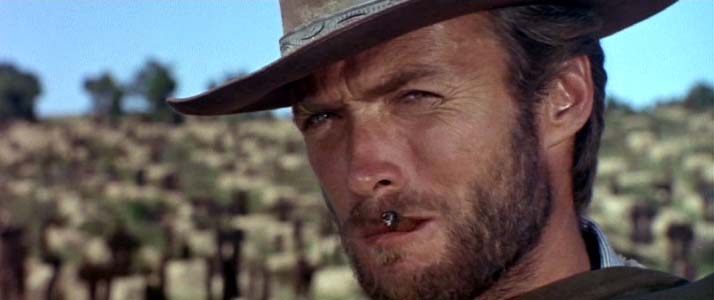
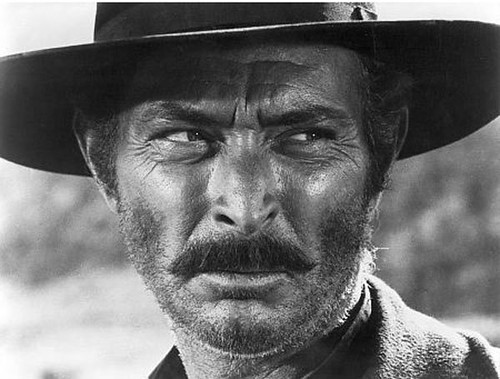
I'm pretty sure I've used that reference before here.  In fact now that I think about it, I remember feeling sorry for Eli Wallach.  I can picture his agent calling him.  "Eli, baby, have I got a part for you!  There's this movie, see, called The Good, The Bag and The Ugly.  The parts of The Good and The Bad have already been cast…"

The Good


What a handsome devil, eh?

So the good news is that my tests last week came back negative for MRD (clean bone marrow) and my numbers look really, really good.

The Bad


A tough customer indeed, is Mr. Van Cleef.   As another "Van", by the way, I have no idea what a "Cleef" is.  A Dutch pronunciation of Cliff?  Hmm.

The bad news is that the MRI is unchanged.  Stable, faint, sub 1cm focal lesions (not currently active for cancer) are still seen at T2, T3, T4, T10 and T12.  I like the faint part, I suppose.  I sure wish they would go away, though, for reasons which will shortly become apparent to readers that see this post through to its conclusion.  As was published by Arkansas just last week (more on this below) these lesions can be issues because "MRD…only evaluates a random marrow aspirate and does not assess any dormant consecratory myelomatous cells, which can be present in focal lesions on magnetic resonance imaging (MRI), and can provide a disease reservoir for relapse."

In other words, as I have reported from time to time in this blog, I want those bloody things gone.

The Ugly


Yes…well…forgive me if I feel more sorry for myself than Eli after all.   Get a load of these graphs, from this article just published by UAMS about how stem cell transplants are curing people.:


Recall I was in the "TT4 Lite" arm of the study.  This can be most readily identified as the lines as the bottom were people are relapsing left and right without any indication of a plateau.

Specifically, TT4 patients with deletion 13 and hypo diploid disease (that's too few chromosomes versus too many -- and it's odd because too many chromosomes is generally a better prognosis) have done well and reached a plateau after two years.  However the other cohorts in TT4 Lite have no fared well at all.  For this with no cytogenetic abnormalities, if this graph is right (and there may be an error in it since there appears to be a cliff at the 5.5 year mark and it suggests something's wrong with the graph selection) there's no plateau and the relapse rate is high with only 30% of people still in CR at the 5.5 year point.  Looking at it objectively, I think there must be a mistake in the graph…so maybe I feel a *little* better if that's the case (I've asked my friends at UAMS to clarify) but still, it looks like the Lite arm isn't faring nearly as well as the Standard arm.   Did I sell my therapy short?  Should I have gone through something more rigorous?  Should I go through something more rigorous right now?

We'll see what they have to say.

I do feel like the goalposts keep being moved farther and farther back.  Can I make it another five years in complete remission and breathe easy?  That's a lot of waiting…

It's ugly.

Tuesday, July 8, 2014

A gold mine of information today!

It was a very productive panel discussion today with Dr. Tiedemann.   There were a lot of important insights, some of which may be controversial but what the heck, let's have fun.  My notes, unfortunately, were eaten by my computer here so this is from memory.  I encourage you to listen back to the broadcast.

* Myeloma progenitor cells are immature cells that are more evolved than stem cells (which can form any type of blood) and are "on their way" to becoming plasma cells, but have not yet become plasma cells

* These immature cells do not express a particular protein which is associated with immunoglobulin expression.  Implication #1: non-secretors probably have these cells moreso than mature plasma cells.

* We don't know whether or not these immature cells start out with cytogenetic abnormalities, or the plasma cells that they become later develop those abnormalities

* Because these cells do not express a particular protein, he believes that proteasome inhibitors are not able to kill them.  Implication #2: a regimen based solely on Velcade or Carfilzomib will not cure the disease, full stop.

* He notes that cells which are resistant to treatment by IMIDs (Revlimid, Pomalidomide, Thalidomide) also fail to express a different protein.  It is unclear whether or not these drugs are killing progenitor cells or merely suppressing their ability to spawn more cells.   Implication #3 and it's a biggie…we don't know for sure, but if these drugs are not killing progenitor cells, then a regimen based solely on novel agents will not cure the disease, full stop.  This is a big deal for doctors that espouse the "well, novel agents might work just as well as transplant."

* When asked what types of medicines DO kill the progenitor cells, he said that there was a belief that high dose melphalan (transplants) do, and that anthracyclines (like adriamycin) might but we don't know.

* He volunteered (I didn't even say the word "cure", promise) that some patients were being cured, and that those who experienced the best results likely used both novel agents (to kill the more mature plasma cells which are capable of self-replicating and after all do need to get killed!) and high dose melphalan (to kill the progenitor cells).  Implication #4: sounds a lot like Total Therapy.

* I asked him whether or not that cytogenetic abnormalities that reflect disease that doesn't respond that well to transplants were observed in progenitor cells or only in the more mature cells -- he said they were researching this now, but did not know.  He also said it was a really good question.  I felt like I did my job today!  ;)

* Importantly (I was going to ask this but someone else did, thankfully), the topic of MRD tests came up and he affirmed that multi flow cytometry tests for MRD likely WOULD show progenitor cells because even though they don't express the one kind of protein required for a protease inhibitor to latch on to them, they do express other proteins that trigger identification under sensitive MRD testing in the marrow.  He did say that there was (only a) theory that some types of cells wouldn't show up, however the progenitor cells turn into plasma cells in "a matter of a couple of weeks" and therefore an MRD test done a couple of weeks after treatment should show the presence of progenitor cells if there are any kicking around.  

I am puzzled by this last phenomenon because of the recurrence of the disease in high risk patients under Total Therapy.  Evidently per other information shared by Dr. Usmani (formerly of Arkansas), at least some of these HRMM patients test MRD negative at some point -- yet they experience relapse.  If that's the case, what is MRD missing?  Is it simply that bone marrow is spotty and it could be clean in one place and not clean in another?  Or is MRD not sensitive enough?   I have something to ask Bart when I see him next week.

I also have to say -- and I don't like politicizing this blog but it's too topical not to -- that people who pine for Canada's health system aren't MM sufferers.  Revlimid still is not available to the newly diagnosed.  There isn't nearly the investment in clinical trials or the ability to enroll in one in Canada.   "It's not like the US," as the good doctor said.  Look, there are no easy answers to the healthcare crisis -- but when it comes to treatment for this disease, I for one am glad that we have the big horrible system that we have here.  :)

And that, my friends, constitutes one very informative session.  And I got a doctor to -- without me soliciting it -- say that patients are being cured.  :)    "Just not nearly as many as we would like."  That's the God's honest truth right there.

Let's keep the research coming, folks!


Another CureTalk Panel today -- interesting stuff!

And no, for once, I won't be asking expressly about whether or not the disease is curable!  :)

The guest today is Dr. Rodger Tiedemann from Princess Margaret Hospital in Toronto.  Dr. Tiedemann published papers last fall in which he discussed why Velcade and other proteasome inhibitors cannot cure Myeloma.  The mechanism that they impact (the proteasome mechanism) doesn't exist in the immature progenitor cells that cause Myeloma.   He likened the use of these drugs to having a goat eat the weeds in your garden, but not getting rid of the roots.

This prompts a number of lines of inquiry -- if it were me interviewing him, I'd get to all of the answers.  I hope the format permits it!

- How does MM originate, and what is the lifecycle of a MM cell?  What are the differences between a progenitor or precursor cell, and later MM cells?   Do progenitor cells carry the chromosomal abnormalities, or does that happen as MM cells proliferate and develop more "genetic chaos"?

- If proteasome inhibitors do not work on the progenitor cells, what kids of therapies do?  IMIDs (Revlimid, Pomalidomide, Thalidomide)?  Alkalytors (Melphalan?)  Anthracyclines (Adriamycin)?  Or do we have nothing that works on them?  Does this vary by disease biology (for example, del17 progenitor cells are more resistant to therapy than other kinds)?  Where does immunotherapy enter into the mix?

- If we have something that works on them, could treating with multiple agents get both the progenitor and the more mature cells?  If this isn't the case, how does he explain people that appear to be cured?

We'll see how much of this we get to -- hopefully a lot, because it has a lot of ramifications (among them: if IMIDs don't get the progenitors either, then we know definitively that the existing novel agents alone are not capable of curing anybody -- this would put an end to one existing controversy and theory).

It should be an interesting conversation -- hope some of you can join us!


The Cure Panel Talk Show on
Multiple Myeloma
e Myeloma on 8 JULY 2014 @ 6:00 pm ET .
To access the teleconference :
Dial -in   (718) 664-6574    approximately 5 minutes prior to the scheduled start time.
Listen to the LIVE Broadcast here:


Monday, June 30, 2014

Why I am a pain about this whole "cure" thing

Hello folks.   I am returned from a weekend in Vegas.  As I remarked to me friend and fellow MM warrior SuzieRose, I figure that whatever cells eight types of drugs didn't kill, a weekend in Vegas ought to finish off.

Our friendship is an ironic one, since it started out in a rocky way via an argument online about doctors and curative protocols and what not.  I've learned a great deal more about the disease and how to consider the cure issue since that time, and I think she has also developed a more nuanced perspective.  It's tempting when one is dealing with this disease to focus on one's own biology and experience and generalize the specific.  We all do it -- I certainly have done so from time to time.  It's very difficult and takes practice not to do it -- or to extrapolate from anecdotal experiences and assume patterns are observed based on that.  The most capable and valuable online Myeloma bloggers all do this from time to time -- it's human nature.

In my own case, as I have said time and time again here, I recognize that my progress to date has been fortuitous (with a few little bumps along the way) and that even if my success is typical for the UAMS Total Therapy protocol, it's not typical for Myeloma.  I have qualified my enthusiastic support for UAMS/MIRT/Total Therapy (which remains enthusiastic indeed) by noting that depending on individual disease biology, age, health and other factors, it's not for everybody.

But it IS for a large subset of people.  Because cure is out there.  And in a moment I'll explain why it matters and why I am persistent in talking about it, both informally here and quasi-formally on panels in which I participate, such as in last Friday's conversation with Dr. Kumar of Mayo, MN, who is a true expert among a group of true experts.

It wasn't long ago that this group of true experts said, unqualifiedly, that this is an incurable disease.  Yet now, as can be heard here on a replay of the panel conversation, Dr. Kumar notes that the disease is curable in some cases -- it's a question of how many.  It's not surprising to me that Mayo will move incrementally on this issue: five years ago, nobody was saying it's curable, but now there is just too much data to ignore.  An immediate flip-flop is neither called for, nor practical for an institution that is conservative and managing its own reputation as well as prudently observing a graduate accumulation of research data.  It would be irresponsible to announce the disease is curable in any event, because even if TT worked for all low risk patients (and it doesn't), there is a meaningful subset of MM patients with disease biology that doesn't respond to it.

Unless and until everybody can be cured, we can't, and shouldn't say the disease is curable.   However, it's equally inaccurate to say that it is universally incurable, or that cures are as rare as "black swans" (no offense to my friends working on that project).  The disease is curable in some cases, through aggressive treatment, for those who are prepared to go through the disruption of that treatment.

Why do I harp on this continually?   Why does nearly every doctor with whom I engage on a panel get some variant of the question that I have been pressing with increasing statistics to back me up?  It's not, as some have accused me of, because I'm defending my doctor.  His legacy in treating this disease is secure.  It's not to make me feel better about my own treatment decision -- I'm secure in that, whatever the outcome.  I will admit I'll feel more relieved if it's acknowledged widely that I'm cured at some point, but that's neither here or there right now.

The reason I am pressing for this is that newly-diagnosed patients deserve to know, and because it influences research, treatment, and patient life post-therapy.

In ONE comment thread, in ONE online support community, in a response to a question simply about "where are you from and where are you being treated" (in other words, as innocuous a question as could possibly be raised, here are some responses.

From a 51 year old diagnosed five months ago: "[I am] so scared and sad.  I'm crying right now.  It's so hard."
From a 48 year old diagnosed four months ago:  "I fired [my] oncologist.  It's hard."
From a 59 year old diagnosed one month ago:  "I am scared too."
Another: "It can be VERY depressing very quickly.  It is a difficult road with a LOT of wrong turns...It takes a lot of tears."
 A caregiver adds:  "I can only imagine how [frightened] you must feel." 
One who was diagnosed ten years ago while smoldering at 53 and who now is beginning treatment:  "[I'm] scared as hell…overwhelmed right now and scared to death with what I am reading."
"How is it that you were diagnosed in 2001 and still in remission?"
I can go on and on.

How much better -- more hopeful -- could patients be if instead of being told "you have incurable cancer" they are told "you have a cancer that may be curable in some cases, and you have a number of options for treatment depending on your preferences?"  How much clearer could their decisions be, if they weren't understandably torn apart emotionally by a diagnosis that can seem like a death sentence?  How much better would they feel if they were able to look at a number of choices and, with their doctor or doctors, make the one that seems best for them -- versus being scared into following whatever protocol their doctor happens to prefer without explaining the context for that decision?

If the disease is curable, it directs research and therapy to better outcomes.  Five years ago, papers were published saying that compete remission wasn't a meaningful marker.  This is FLAT.  OUT.  WRONG.  People have backtracked on it now and are continuing to do so.  But if CR isn't a meaningful marker, it's not a goal of treatment.  If it *IS* a meaningful marker (as a precursor to a cure that could be out there) then research is focused on getting to CR, treatment is focused on getting to CR, etc.   If the disease is curable for low-risk patients, then more research is directed towards those with biology that doesn't respond to existing treatment -- which of course benefits all patients.  These are meaningful and important influences on the direction of research and therapy.

If the disease is curable, those of us carrying on with the realities of daily life think and are thought of differently.  This disease, if incurable, crushes careers, wipes out insurability, destroys relationships.  If curable, careers are interrupted but not destroyed -- insurers (life, medical, disability) will insure patients after a period of remission, just as they do with other cancers -- and just maybe there will be less stress placed on interpersonal relationships.   I have a friend whose scientific experience and advice I have referenced in this blog in the past, and he married a woman whom he knew to have terminal cancer, with only a short time left to life.  This was an incredibly compassionate and loving act.  Not all people have that much integrity -- it takes a very special person and the stories I hear about patients being abandoned by spouses and loved ones after a diagnosis are devastatingly sad.  If the disease is curable, it can't help but be thought about differently.

This is why it's important to keep pounding this drum.

I've gotten two members of the Mayo Dream Team (I don't say that sarcastically -- they are among the best) to say in a public forum that the disease is curable, and over time they'll admit it more readily, as will others.  It may even be enough for me to let up on them and ask a different question next time.  :)

That said, this issue remains of vital (literally) importance.  And ignoring it does patients and caregivers a disservice.  So I will pound the drum as needed from time to time.


Tuesday, June 24, 2014

Gum update, and Cure Talk panel this Friday, 6/27

So I met yesterday with two doctors and a dental hygienist.  One doctor had nothing to do with anything, other than he noted that I didn't have any bruising or nosebleeds (he's an ENT).  The second doctor is a neuro-oncologist who knows what happens to people after transplants.  He said that my bleeding was "more profound that he would like to see" but also thought it might resolve on its own.  He says that post-transplant, platelets -- even if they are in sufficient number -- sometimes don't behave the way platelets do before transplant.  In any case, he didn't see a reason to be alarmed.

I will get clotting factors run in Arkansas, and possibly a platelet smear.  I need to talk with the PA there to make sure these tests are added to the usual battery I will receive upon showing up.

This neuro-oncologist also told me that the dentist was unlikely to want to touch me.  But the hygienist was unafraid.  She consented to not going all-in on the tooth scraping, but she cleaned them up.  It wasn't a bloody as I was afraid it would be.  And this morning I even made it through a tooth-brushing without much incident.

In other news less related to gum care, I am participating in another Cure Talk panel on this Friday, June 27th, at 5PM ET.   In addition to our usual group of patient panelists, we are having MM expert Dr. Shaji Kumar of Mayo to discuss some interesting topics.   Among them the newest treatments and trials being discussed at ASCO, the Mayo Measles experience, and of course my usual question about whether or not aggressive treatment is curing some patients.   It may seem like I am beating a MM-afflicted horse* with this but there are reasons for my question, which range from newly-diagnosed patients are given an accurate portrayal of their options, to influencing the way insurance companies (medical, life, disability, etc.) view those with this condition.

You can register for the call here:

http://www.curepanel.carefeed.net/event/rsvp/ASCO-2014-Myeloma-Updates-with-Dr-Shaji-Kumar-of-Mayo-Clinic/33/

The dial-in for the call is 718-664-6574.

Hope some of you can join us!


*Get the hilarious metaphor?  Not a dead horse, because he might be curable.  Brilliant, right?  ;)